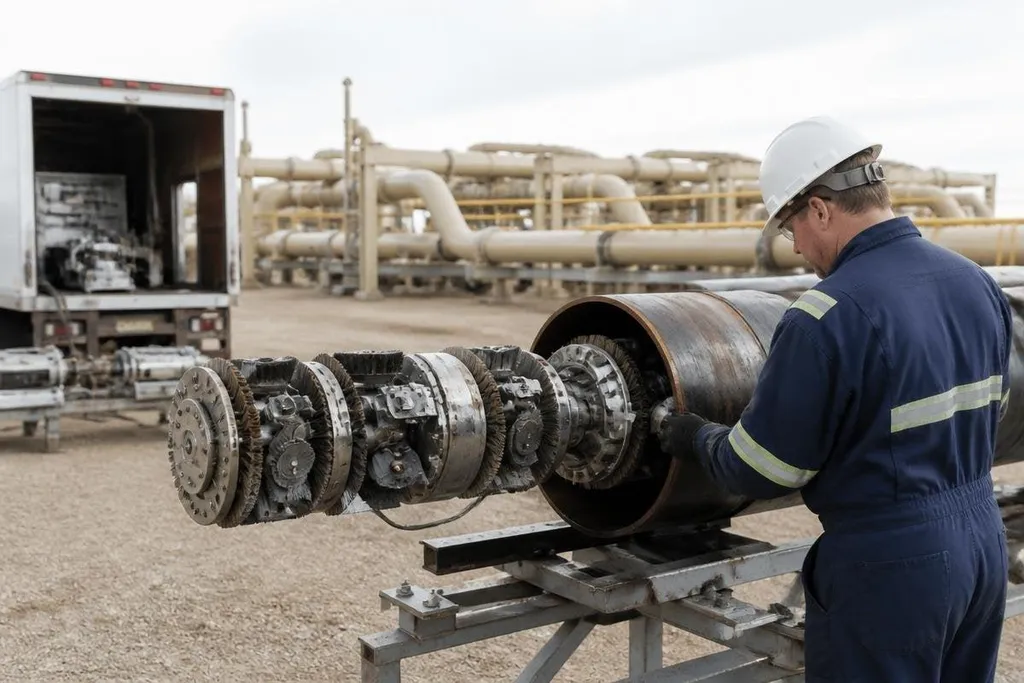
A pipeline robot can inspect the inside of a pipe while the line stays in service or shuts down for less time. That creates several business opportunities around the robot itself, from inspection work to data systems and repair planning.
- Inspection work: detect corrosion, cracks, dents, and blocked sections inside the pipe.
- Data services: turn sensor readings into reports that maintenance teams can use.
- Robot support: handle launch, recovery, cleaning, repair, and operator training.
The robot is only one part of the sale
Pipeline inspection robots, often called in-line inspection tools or “pigs,” travel through a pipe with the flow of oil, gas, or water. Their sensors collect information about the pipe wall, welds, shape, and position.
A magnetic flux leakage sensor can spot changes linked to metal loss. Ultrasonic sensors can measure wall thickness.
An inertial measurement unit records movement, which helps place a defect along the route. Each tool answers a different inspection need, so a company may build a service around one sensor type instead of selling a general-purpose robot.
The buyer usually wants a decision, not a sensor file. That leaves room for firms that clean the data, mark the location of a defect, compare results from two inspection runs, and prepare a repair list for the operator.
Inspection data creates repeat work
A single robot run produces information that can support several paid services. An inspection company can sell the run itself, then charge for data review, engineering reports, and follow-up checks after repairs.
The business becomes more useful when it connects a defect to a maintenance action. A report that says “metal loss detected” gives a team one fact. A report that shows the defect’s position, estimated size, pipe section, and change since the last run gives them a work order to review.
That handoff gives pipeline teams a practical way to judge robot claims. Reports from Robot 24 can put the robot model, sensor, test site, date, and measured result beside an inspection finding. Those details help a service company price work from defect detection through maintenance planning.
Operators also need records that can pass internal review. A service company that keeps raw sensor data, inspection settings, route data, and report changes can sell a better audit trail than one that sends a single PDF and deletes the working files.
Field services may be the easier entry point
Building a full inspection robot takes hardware, sensor design, control software, testing, and field support. A smaller company can enter the market by handling the work around an existing tool.
That work includes preparing the launch site, checking the tool before insertion, tracking its progress, receiving it at the other end, and moving data into the customer’s maintenance system. The work is physical and technical. It also repeats every time a customer runs an inspection.
Training offers another path. Operators need to know how to prepare the line, manage pressure and flow, respond when the tool slows, and check the data after recovery. A training company can sell courses, field procedures, and refresher sessions without making the robot.
The hard limits
Pipeline robots do not suit every line. Pipe diameter, bends, valves, flow speed, pressure, access points, and the transported material all affect the inspection plan. A tool made for one pipe may not pass through another.
Data quality also depends on the run. A tool that moves too quickly can reduce the useful reading from some sensors. Poor tracking can make a defect hard to locate. Operators still need other inspection methods when the robot cannot enter the pipe or cannot collect enough data.
The buyer may also face long approval cycles. A service company must show that its tool, process, and report meet the operator’s safety and inspection rules. That makes field records and repeat results more useful than a polished demonstration.
A practical business check
Before spending money on a pipeline robot company, check these points:
- Pipe fit: identify the pipe sizes, bend limits, valves, pressure range, and flow conditions the tool can handle.
- Sensor proof: confirm which defects the sensor detects and how the result gets checked.
- Data handoff: define the report format, raw data access, location method, and storage period.
- Field burden: price launch, recovery, cleaning, transport, repairs, and trained staff.
- Repeat demand: ask how often the same operator needs inspections or follow-up work.
I'd start with inspection data or field support before building a new robot from scratch. Those services need less hardware investment, and they stay close to the work operators already pay for.
The strongest opportunity is the part that turns a robot run into a repair decision. If a company can connect sensor data to a known pipe location and a clear next action, it has a service that can be sold after the robot leaves the line.